
You’re walking across your living room to grab a blanket as the October air starts to bite, and you feel it - a slight bounce, a little give in the floor that wasn't there this summer. Or maybe you hear a new chorus of creaks and pops when you walk down the upstairs hallway. It’s easy to dismiss these things as just “the house settling,” but as someone who’s spent over a decade working inside homes just like yours, I can tell you these are often the first whispers of a deeper issue: problems with your floor joists.
Here in the Potomac area, the shift into autumn brings more than just heavy leaf fall. The ground gets wetter, and we start to see the first freeze-thaw cycles. This seasonal change can put new stresses on your home’s foundation and structural frame, making minor issues suddenly much more noticeable. Especially in the larger, beautiful homes common in our area, finished basements and crawlspaces can hide problems until they become significant. Let’s walk through what you should be looking for.
Common Signs and Symptoms
Over the years, my team and I have developed a keen eye for the subtle clues a house gives when its support system is compromised. These are some of the most common bouncy floor joists warning signs that homeowners should be aware of. You don't need to get into the crawlspace with a flashlight just yet; many of the signs are visible right from your living spaces.
- Bouncy or Spongy Floors: This is the classic symptom. If your floor feels more like a trampoline than a solid surface when you walk across it, your joists are likely deflecting more than they should. You might notice dishes rattling in a cabinet as someone walks by.
- Sloping or Sagging Floors: A more advanced sign is a visible dip or slope in the floor. Try this: place a marble on the floor in the middle of a room. Does it consistently roll to the same spot? This indicates a low point, which is often a direct result of sagging joists below.
- New Drywall Cracks: Your home's frame is an interconnected system. When floor joists sag, they pull on the walls and ceilings they support. Look for new cracks appearing in the drywall, especially ones that run diagonally from the corners of door frames or along the seams where walls meet the ceiling.
- Sticking Doors and Windows: A door that suddenly starts to stick at the top or a double door that no longer aligns perfectly can be a sign that the frame has shifted. Sagging floors can pull door frames out of square, causing them to bind.
- Gaps Under Baseboards: If you see a new gap opening up between the bottom of your baseboard trim and the flooring, it's a clear sign that the floor is sinking away from the wall.
- Loud Popping or Creaking Noises: While all houses make some noise, new, loud, or persistent sounds when you walk over a certain area can indicate that wood members are moving and rubbing against each other under stress.
What Causes This Problem
Identifying the symptoms is the first step. Understanding the root cause is crucial for finding the right solution. In Potomac, I often see a few common culprits, particularly in the large, neo-eclectic homes built in the 1980s. These properties, with their grand, open-concept interiors, presented unique framing challenges.
- Excessive Joist Spans: The desire for wide, open rooms in 1980s-era homes often led to floor joists spanning long distances without intermediate support. While they may have met the building code at the time, these long spans are naturally more prone to bouncing and sagging over decades of use.
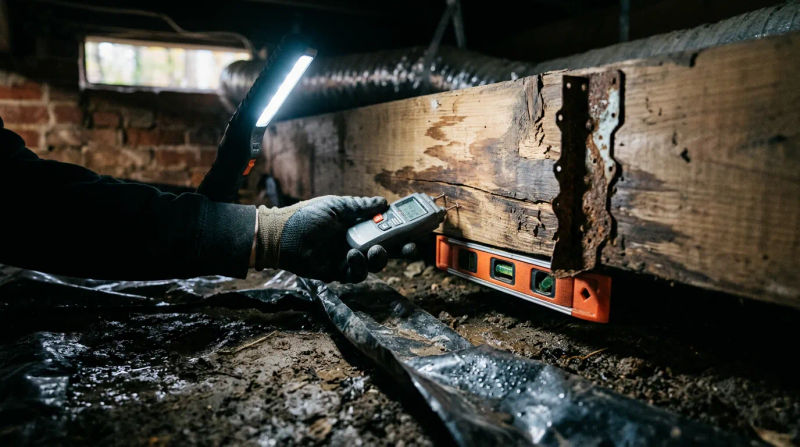
- Moisture and Rot: This is the number one enemy of any wood structure. As we head into fall, heavy leaf fall can clog gutters, causing water to spill over and saturate the ground near your foundation. This moisture can seep into crawlspaces or basements, raising the humidity and promoting fungal growth and wood rot that weakens joists. A damp, musty smell in your basement is a major red flag.
- Heavy Loads: Think about how we live in our homes today compared to 40 years ago. A massive granite island in the kitchen, a huge entertainment center, or a heavy safe can place concentrated loads on joists that they weren't originally designed to handle.
- Improper Alterations: I’ve seen many cases where a previous renovation caused the problem. Sometimes a homeowner or an inexperienced contractor will cut a joist to run plumbing or ductwork without properly reinforcing it, or they'll remove a load-bearing wall without installing an adequate beam and support columns. This redirects loads to areas that can't handle them, leading to sagging floor joists in Potomac homes that were otherwise stable.
- Pest Damage: Termites, carpenter ants, and powderpost beetles can silently turn strong, solid wood joists into a hollowed-out mess. Often, the damage isn't visible until it's extensive.
When to Call a Professional
It can be tempting to search for a DIY floor joist repair guide, but I strongly advise against it for anything beyond the most minor issue. The floor system is the primary structure supporting you, your family, and your belongings. Getting a repair wrong can have catastrophic consequences.
Deciding when to make the call is simple: if you notice any of the signs we've discussed, it's time to get a professional opinion. Here’s why:
- Accurate Diagnosis: Is the bounce from a long span, or is it from a joist that's been eaten by termites? Is the sag from a heavy island, or is the main support beam failing due to moisture? An experienced professional can distinguish between these causes, which require very different solutions.
- Comprehensive Assessment: When my team performs an evaluation, we use a structural framing inspection checklist to ensure nothing is missed. We examine the joists, beams, support posts, foundation walls, and connections. We look for moisture intrusion, pest evidence, and signs of structural stress. This holistic view is something you can't get from a quick look.
- Safe and Correct Solutions: A professional will design a repair that is safe, compliant with modern building codes, and permanent. Solutions can range from simply adding sister joists or blocking to installing a supplemental beam with new support columns. Trying to guess the right solution can lead to wasted money or, worse, a bigger structural failure down the road.
Don't wait for a small bounce to become a major sag. The problem will not fix itself, and it will almost certainly get worse and more expensive to repair over time.
Conclusion
Your home is a complex system, and the structure beneath your feet is its backbone. Paying attention to warning signs like bouncy floors, new cracks, and sticking doors is the best thing you can do to protect your investment. These symptoms are your house's way of communicating that something is wrong.
Remember the common causes we see in the Potomac area, from the long joist spans in 1980s homes to the increased moisture that comes with the fall season. Acting early is key. An inspection now, before winter sets in and potentially limits access to crawlspaces or foundations, can save you a significant amount of stress and money.
If you notice any of these signs, contact a local, qualified professional for an inspection. A thorough assessment will give you a clear understanding of the problem and the peace of mind that comes with knowing the right way to fix it.