
As a remodeling supervisor who has spent over a decade working on homes in and around Langley Park, I’ve learned that houses have their own way of communicating. Sometimes, it’s a whisper - a floorboard that creaks a little louder in the morning. Other times, it’s a shout - a door that suddenly refuses to close properly. This time of year, as the leaves fall and the air gets crisp, your home might be trying to tell you something important about its foundation.
You might dismiss that sticking door as a quirk of autumn humidity. But as you’re outside raking leaves, it’s the perfect time to take a closer look at what’s happening at the base of your home. The combination of October’s wet ground and the first impending freezes can turn minor, hidden issues into significant problems. Catching them now can save you a lot of headaches and expense down the road.
Common Signs and Symptoms
From my experience on job sites across Prince George’s County, foundation issues often reveal themselves in subtle ways before becoming major structural problems. Here are seven key signs I tell homeowners to watch for, especially as we head into winter.
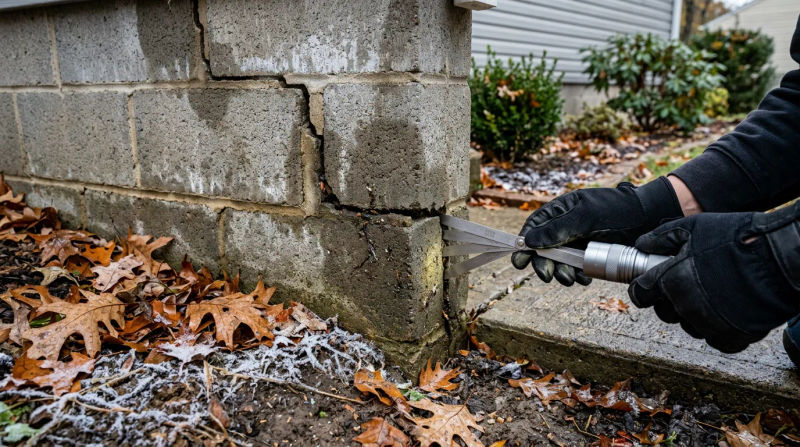
- Stair-Step Cracks in Brick or Block: This is one of the most classic signs of foundation settling. If you have a brick or concrete block foundation, look for cracks that follow the mortar joints, creating a zig-zag or stair-step pattern. These stair-step foundation cracks often indicate that one section of the foundation is moving or sinking at a different rate than another.
- Sticking Doors and Windows: This is a symptom many people notice first. When a foundation shifts, it can twist and warp the frame of your house. The result? Doors that jam in their frames or windows that are suddenly difficult to open and close. If you have several sticking doors, foundation movement is a likely culprit.
- Cracks in Interior Drywall or Plaster: Foundation movement doesn’t just show up on the outside. Look for new or expanding cracks in the drywall or plaster inside your home, especially over doorways and windows or where walls meet the ceiling. These are stress fractures caused by the house frame being pulled in different directions.
- Sloping or Uneven Floors: Do you ever feel like you’re walking slightly uphill in your own hallway? Or maybe you’ve dropped a marble and watched it roll consistently to one side of the room. Sloping, sagging, or uneven floors are a serious red flag that the supports underneath are sinking or failing.
- Gaps Forming Around Doors, Windows, or Walls: Take a look at the trim around your windows and doors. Are there gaps opening up between the frame and the wall? You might also see separation where a wall meets the floor or ceiling. This indicates that parts of your home are literally pulling away from each other due to foundational shifts.
- Water in Your Basement or Crawlspace: Cracks in the foundation are more than just a cosmetic issue; they are entry points for water. If you're noticing new damp spots, puddles, or a persistent musty smell in your basement after it rains, it’s a strong sign that your foundation's integrity is compromised.
- Bowed or Leaning Foundation Walls: This is one of the more advanced and urgent signs. Go into your basement or crawlspace and look at the foundation walls. If they appear to be bowing inward or leaning, it’s often due to immense pressure from the soil outside. This requires immediate professional attention.
What Causes This Problem
Understanding the signs is the first step; knowing the cause helps you appreciate the urgency. In our area, the primary culprit is the soil. The clay-rich soil around Langley Park expands significantly when it gets wet and shrinks dramatically when it dries out. This constant cycle of expansion and contraction puts immense stress on a home’s foundation.
This time of year, the problem is amplified. Heavy autumn rains saturate the ground, causing the soil to swell and press against your foundation. Then, as the first freezes arrive, that trapped moisture in the soil turns to ice and expands, exerting even more force. These are classic freeze-thaw foundation damage signs. This cycle can widen existing hairline cracks and accelerate any settling that’s already begun.
Many of the homes in Langley Park are charming post-WWII builds from the 1940s. These Minimal Traditional and Cape Cod houses were often built with concrete block foundations and brick exteriors. While they have stood the test of time, 70+ years of exposure to our region's freeze-thaw cycles can take a toll. The mortar joints in these older block and brick foundations are often the first place we see the stress manifest as cracks.
Furthermore, additions are common on these practical starter homes. If the foundation for an addition wasn't properly integrated with the original structure, differential settling - where the old and new parts of the house move at different rates - is a frequent issue.
When to Call a Professional
While it’s great for a homeowner to be able to spot these signs, diagnosing the root cause and determining the right solution is a job for an expert. My team and I have seen people try to patch a major structural crack with a bit of caulk, which does nothing to address the underlying pressure causing the crack in the first place.
Here’s a simple guide:
- If you see hairline cracks (less than 1/8 inch wide) that don’t appear to be growing, you can monitor them. Take a picture with a coin for scale and check it every few months.
- If you notice any of the major signs listed above - especially stair-step foundation cracks, multiple sticking doors, sloping floors, or bowing walls - it’s time to schedule a professional foundation inspection.
A qualified professional won't just look at the crack itself. They will assess the entire property, including soil grading, drainage, and the overall structural integrity of your home. They can determine if the movement is ongoing and what type of repair is needed to stabilize the structure for the long term. Waiting until a small problem becomes a big one will only lead to more complex and costly repairs.
Conclusion
Your home is your biggest investment, and its foundation is quite literally what holds it all together. As you’re enjoying the autumn weather in Langley Park, take a few moments to walk around your property and look for the tell-tale signs of foundation distress. Pay attention to those sticking doors, keep an eye on cracks inside and out, and be aware of any new unevenness in your floors.
Acting early is the key. Addressing foundation issues before the ground freezes solid for the winter can prevent further damage and give you peace of mind. A small investment in an inspection now can protect you from major structural repairs later.
If you notice any of these signs, contact a local construction professional for an inspection. An expert eye can help you understand the problem and secure your home for many years to come.