
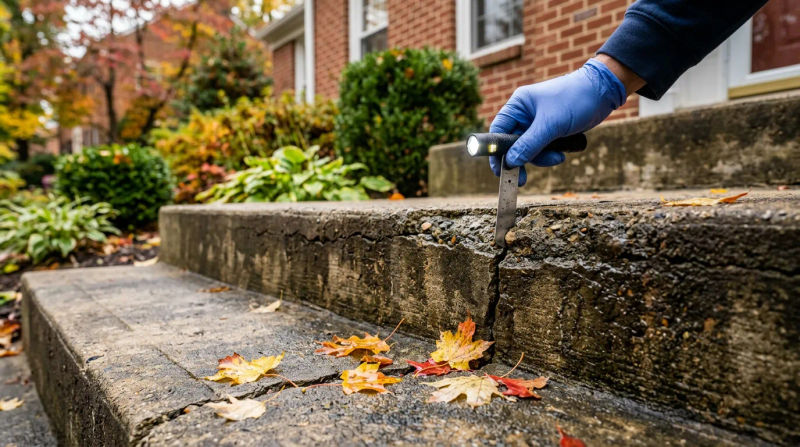
The other day, I was grabbing my mail and saw my neighbor across the street sweeping a huge pile of leaves off his front porch. It’s that time of year in College Park - the air gets crisp, the trees put on a show, and then they cover our walkways. As he swept, he paused and bent down to look closer at his concrete steps. I could tell from his posture he’d just noticed something that wasn’t there last spring: a new crack, spiderwebbing out from the edge of a tread.
It’s a familiar scene. Heavy leaf fall makes us pay more attention to our walkways, and what we find can be concerning, especially with winter on the way. As a project supervisor who has spent over a decade working on homes here in Prince George’s County, I can tell you that October is the perfect time to give your front steps a thorough inspection. The first freezes can turn a small crack into a major problem, and a slightly wobbly step can become a slick, dangerous hazard overnight. Taking a few minutes to check now can save you from a bigger headache and a potential accident this winter.
Common Signs and Symptoms
Your front steps are the handshake of your home - they provide curb appeal and, more importantly, safe access. When they start to fail, they usually give off clear signals. Here are some of the most common issues my team and I see on job sites.
- Visible Cracks: This is the most obvious of the cracked concrete steps warning signs. Look for hairline cracks, wider structural cracks, or spiderweb-like crazing on the surface. Pay close attention to cracks near the edges or corners of the steps, as these are points of high stress.
- Spalling or Pitting: Does the surface of your concrete look like it's flaking away or developing pockmarks? This is called spalling. It happens when water penetrates the concrete, freezes, expands, and pops off the top layer. It’s a sure sign that the concrete's integrity is compromised.
- Uneven or Sloping Treads: Stand back and look at your steps from the side. Do they appear level? If a step is noticeably slanting forward or to one side, it’s a classic example of settling porch landing symptoms. This not only creates a tripping hazard but also indicates a problem with the foundation beneath the steps.
- A Loose or Wobbly Handrail: Grab your handrail and give it a firm shake. Is there significant give or movement? A secure handrail shouldn't budge. This is a critical item on any loose handrail safety checklist. The problem could be a loose fastener, but often it points to the material the rail is anchored into - be it wood, brick, or concrete - decaying or cracking.
- Crumbling Mortar Joints: For those with brick or stone steps, common in College Park’s post-war homes, check the mortar between the bricks. If it's turning to sand, cracking, or falling out, water is getting into the structure. This weakens the entire staircase and can lead to loose bricks.
- Pooling Water: After it rains, do you notice puddles lingering on the steps? Proper steps are designed with a very slight slope to shed water. If water is pooling, it means things have shifted, and that standing water will accelerate deterioration, especially during freeze-thaw cycles.
- A Gap Between Steps and House: Look closely at where your top step or landing meets your home's foundation. Is there a visible gap? This is a serious red flag that the entire staircase is pulling away from the house, a significant sign of settling.
What Causes This Problem
Understanding why your steps are failing can help you appreciate the importance of a proper repair. It’s rarely just one thing; usually, a combination of factors is at play.
The number one culprit in our region is water. The repeated freeze-thaw cycles we experience in Maryland are brutal on masonry. Water seeps into tiny, invisible pores and cracks in the concrete or mortar. When the temperature drops, that water freezes and expands with incredible force, making those tiny cracks bigger. October’s first freezes are often when the most damage occurs.
Another major cause is soil erosion and poor compaction. Your steps are heavy, and they need to sit on a stable, well-compacted base of soil and gravel. Over time, rainwater runoff can slowly wash away the soil from underneath the steps. This creates voids, and the unsupported structure begins to sink and settle, leading to sloping treads and cracks.
We also have to consider the age and original construction of many homes in the area. A large portion of College Park housing consists of charming Cape Cods and Colonials built in the 1940s to meet post-WWII demand. The construction methods and materials from that era have served families well for over 70 years. However, the original footings might not be as deep as modern standards require, and the concrete mix itself may be more susceptible to wear after decades of exposure. What we're seeing now is simply these materials reaching the end of their natural service life.
Finally, issues can stem from tree roots pushing up from below or even a poor initial installation that is only now beginning to show its flaws.
When to Call a Professional
Some small issues can be handled by a diligent homeowner, while others absolutely require professional assessment and intervention. Knowing the difference is key to both your safety and your budget.
Potential DIY Fixes:
- Minor Hairline Cracks: If you have a few very fine cracks (less than 1/8-inch wide), you can clean them thoroughly and apply a high-quality concrete crack filler or sealant. This is a great preventative measure to keep water out before it can freeze.
- Cleaning: Removing moss, mildew, and packed-in dirt from joints and surfaces can help your steps dry faster and prevent moisture from being trapped against them.
When to Call for a Professional Assessment:
- Structural Cracks or Settling: If you see any of the settling porch landing symptoms - sloping treads, a gap between the steps and the house, or cracks wider than a quarter-inch - it’s time to call for help. These are not cosmetic issues; they indicate a foundational problem that requires an expert solution. A proper front step repair might involve underpinning or rebuilding the base.
- A Loose Handrail: Don’t underestimate this. If your handrail is wobbly, it’s a significant safety liability. While it might seem like a simple tightening job, the anchor point is often the real issue. An experienced professional can determine if the anchor needs to be reset, moved, or completely rebuilt for it to be safe.
- Widespread Spalling or Crumbling Masonry: If the surface of your steps is flaking off in large patches or the mortar is disintegrating, a surface patch won't last. The underlying material is failing, and a professional will need to assess whether a resurfacing is possible or if a partial or full rebuild is necessary.
- Multiple Issues Combined: If your steps show a combination of these problems (e.g., cracks, settling, and a loose rail), it’s a clear sign that a comprehensive evaluation is needed.
Conclusion
Your front steps are more than just a path to your door; they’re a central feature of your home’s safety and curb appeal. As we head into the colder, wetter months here in College Park, those small issues you’ve been ignoring can quickly escalate. A small crack can widen, a slight wobble can become a complete failure, and a minor trip hazard can become a serious danger on an icy morning.
Take a few minutes this weekend to walk around and inspect your steps and handrails carefully. Look for the warning signs we’ve discussed - cracks, crumbling surfaces, unevenness, and loose railings. Catching these problems now, in the fall, gives you time to address them before winter sets in, preventing further damage and ensuring your home remains safe and welcoming for your family and guests.
If you notice any of these signs, contact a local general contractor for an inspection. An experienced professional can accurately diagnose the root cause and recommend the most effective and long-lasting solution.